

Though you may not remember as far back as the beginning of 2020, both the economy and investment markets were cruising along like a family headed down the expressway to summer vacation at the beach. And then suddenly…well, COVID struck. The impact of the pandemic and the response by our government and others around the globe were significant. As we begin 2022, we will have to contend with some of the effects of those responses. To understand how we are doing this, David Jeter, CFP®, spent time with Joe Clark, CFA, to ponder questions about 2022.
2022 is an election year. How should an investor prepare their portfolio for this?
Joe Clark, CFA:
Markets hate uncertainty, and that’s what elections present. During previous midterm election years, the S&P 500 has been roughly flat with periods of volatility before the election. After the election (when there is certainty), the election becomes a catalyst, leading the market higher.
Regarding how to prepare a portfolio, there’s really nothing you should do. Suppose there is a volatile period before the election. In that case, you can use that time as an opportunity to rebalance, or if you are able, contribute to buying equities at a lower price.
Overall, markets do not care which party is in Congress or the White House. Strong rallies and bear markets have happened with various parties controlling Washington. Politics should not be a factor when making investment decisions.
We hear about the market hitting all-time highs. Does that mean a correction is about to happen?
Joe Clark, CFA:
There is no correlation between all-time highs and market corrections. Corrections are normal, just like the market hitting new highs. Corrections typically happen every year, with the average annual drawdown being around 14%. When corrections do occur, investors can use them as a buying opportunity rather than a time to panic.
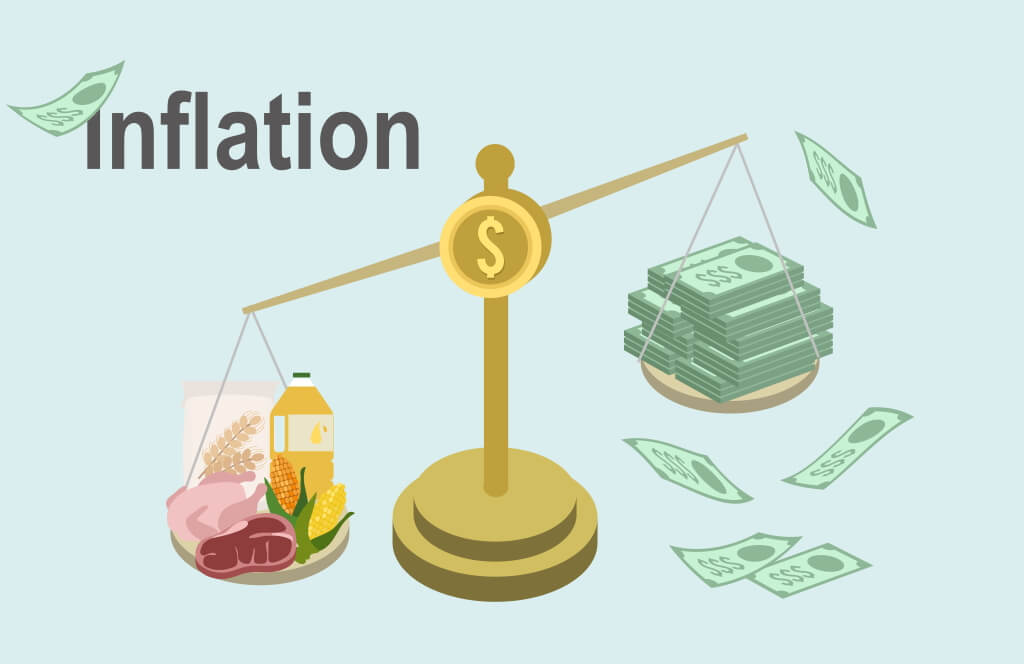
Inflation may stick around at much higher levels than we have experienced over the past decade. How does one “protect” their investments?
Joe Clark, CFA:
Quality equities can offer valuable protection against inflation. These are companies that possess competitive advantages in their industry; therefore, they have the pricing power and the ability to pass at least some of the cost increases onto consumers. As high-performing companies in their industry, they should continue to perform well in an inflationary environment.
High growth, momentum stocks are the ones that are underweight during an inflationary period. These stocks are trading high because their valuations are justified in a low-rate environment. As rates rise, traders question whether those companies are worthy of higher valuations, leading to falling share prices, as we saw during the first week of 2021.
For investors with a higher bond allocation, introducing inflation-protected strategies or real assets would be beneficial. Other than high growth equities, bond investments will see the most challenges in an inflationary environment.
Like other environments, these changes should be made at the margins. A financial advisor can build a portfolio to help meet your long-term needs in shifting market environments. Minor changes could benefit a portfolio, but major changes can negatively impact and risk not meeting long-term goals.
How do fund managers adapt their portfolios to consider inflation, market highs, and election years?
Joe Clark, CFA:
Each fund manager has their own investment philosophy and process. Some will react to macro factors; others will not. Elections are the one factor most managers will not consider. Even the best forecasters cannot predict politics. As we discussed earlier, politics should not be a consideration for client portfolios, and the same goes for mutual fund managers.
Inflation and valuations could be considered based on the manager. Some managers are more valuations conscious, so if a stock continues to trade higher, managers will try to ensure they still see upside and a benefit to holding the stock. Inflation can be considered for some managers more than others. They will look to answer questions like: can a company pass rising costs to consumers? If not, how much will rising costs impact their margins and earnings, and how does this affect their stock price?
One reason client portfolios are a combination of many different managers is to diversify not only asset classes but also investment philosophies. Depending on the environment, some managers will be outperforming, while others underperform. This dynamic helps provide clients with less volatile returns over the long term and allows the down markets to not feel as bad as the overall market.
The investing environment is always complex. A financial advisor can guide you to focus on the things in your life that you can control and minimize the energy you spend on the things you can’t. This doesn’t mean you aren’t aware, only that you keep issues like elections, interest rates, and inflation in a proper long-term perspective.