
Key Takeaways
- Higher interest rates may be more normal than they feel. Persistent inflation, resilient economic growth, and increased bond supply can keep upward pressure on rates, while today’s yield levels are not unusual by historical standards.
- Higher yields make bonds more meaningful portfolio contributors, but interest-rate risk remains. Diversifying across maturities and sources of income can reduce reliance on any single interest-rate or economic outcome.
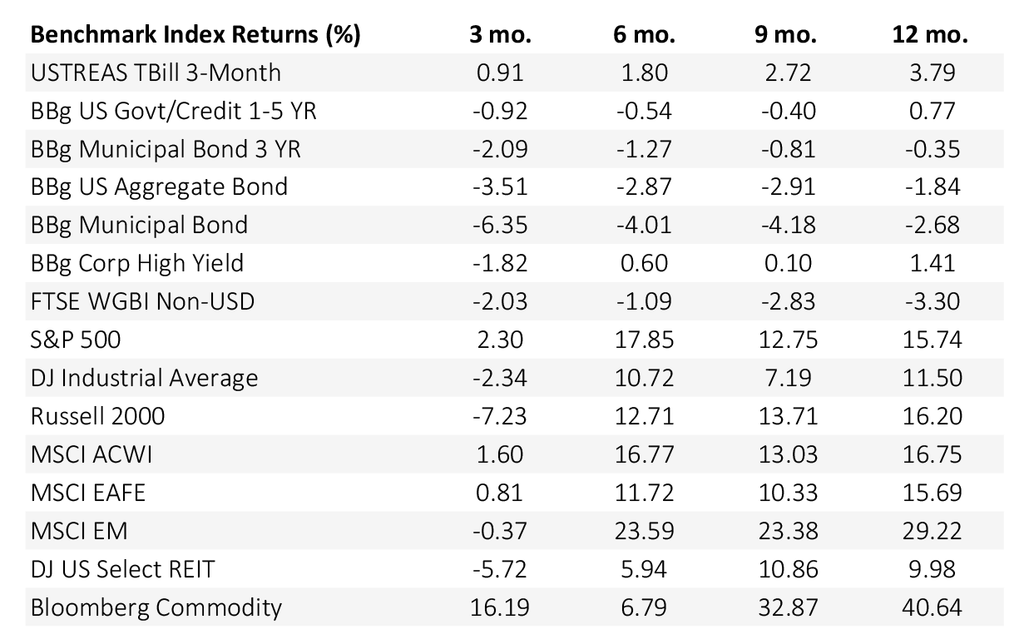
For the past few quarters, this Capital Market Review has focused primarily on stocks, particularly how diversification has returned as international and smaller U.S. companies have outperformed large-cap technology stocks. While diversification continues to benefit portfolios, it is time to shift our focus to the bond market and the volatile path of interest rates.
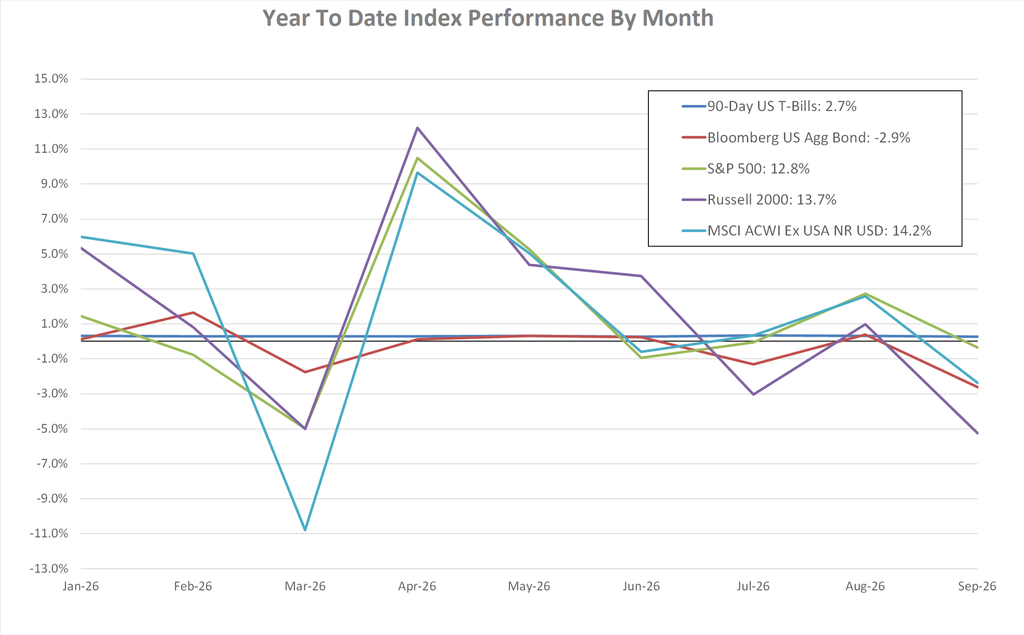
The rate environment we’re in today is a very different starting point for bond investors than it was at the beginning of 2022. Then, yields were near historic lows, providing little income to offset falling bond prices as rates rose. Today, yields are significantly higher, providing investors with more income and a greater cushion against future price declines.
This higher starting level of income changes the outlook for bonds. Investors no longer need falling interest rates to support returns. While declining rates could provide an additional boost, today’s higher yields enable income to do much of the heavy lifting again.
Higher Interest Rates – Here to Stay for Now
Let’s consider why rates are higher. The Federal Reserve receives much of the attention, but it is only one piece of the puzzle. The Fed has significant influence over short-term interest rates, while longer-term rates are driven more broadly by inflation, economic growth, bond supply, and investor expectations.
Inflation has fallen substantially from its 2022 peak, but it remains an important consideration, and the economy has stayed relatively resilient. At the same time, bond supply has increased. Corporations, including large technology companies investing heavily in artificial intelligence infrastructure, often called “hyperscalers,” have been issuing debt to help fund growing capital expenditures. Along with increased Treasury issuance, this has added to the supply of bonds available to investors. Together, persistent inflation, resilient economic growth, and increased bond supply can put upward pressure on interest rates.
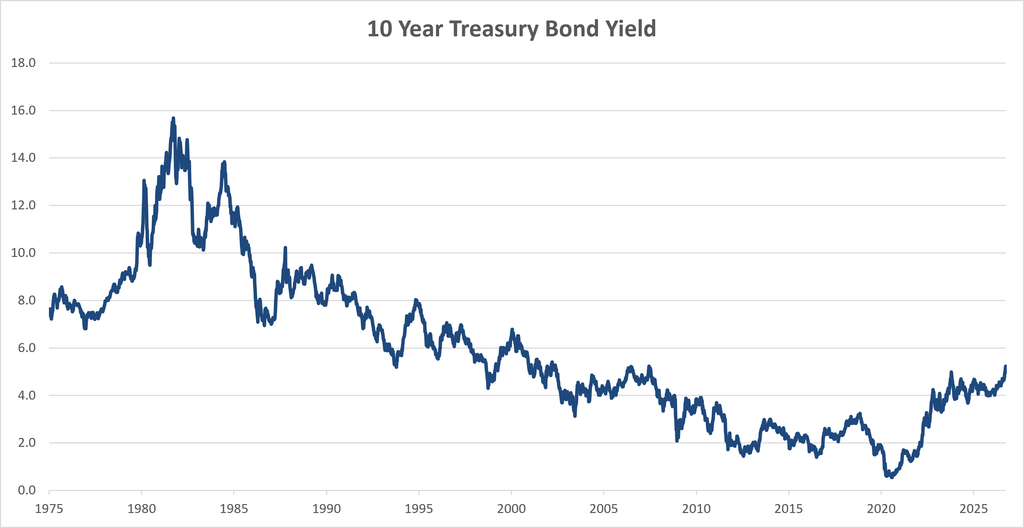
There is no doubt rates are higher, but we may also need to reframe what constitutes a “normal” interest rate environment. Looking back at the history of the 10-year Treasury yield, rates above 5% are hardly unprecedented. The extremely low rates of the 2010s, and particularly those following the pandemic, are the environment investors remember most recently, but they were not necessarily normal. Rather than viewing today’s rates as unusually high, we may simply be returning to an environment in which investors receive a more meaningful level of income for owning bonds.
What does this mean for investors?
For bond investors and savers more generally, higher rates are not necessarily a bad outcome. Higher rates can create volatility, and bond returns can still look weak over shorter periods. Still, investors are also receiving considerably more income than they did for much of the last decade.
If rates continue to rise, bond prices can still face pressure, particularly for bonds with longer maturities. But higher starting yields provide a larger income cushion to absorb some of that volatility. This is also why we focus on total return, not simply yield. Income is an important component of a bond’s return, but changes in its price matter as well. A higher yield can be attractive, but it should be considered alongside the risks required to earn it.
Just as we would not rely on one area of the stock market to drive returns, we do not want to rely on one segment of the bond market to provide all of a portfolio’s income. Treasury bonds, corporate bonds, shorter-term investments, and other income-producing assets and strategies can respond differently as interest rates, credit conditions, and the economy change. Diversifying income sources reduces reliance on any single interest-rate or economic outcome while allowing portfolios to benefit from today’s higher yields.
For the past several quarters, we have discussed the value of diversification as leadership shifted across global equity markets. The same principle applies to income. We cannot predict where interest rates go from here, just as we cannot consistently predict which part of the stock market will lead. We can, however, build portfolios with multiple sources of return and income. Higher yields have made bonds more meaningful contributors to portfolios again, while diversification helps manage the risks that come with an uncertain path for interest rates.