

Key Takeaways
- Strong corporate earnings and continued economic growth supported markets despite geopolitical and interest rate uncertainty.
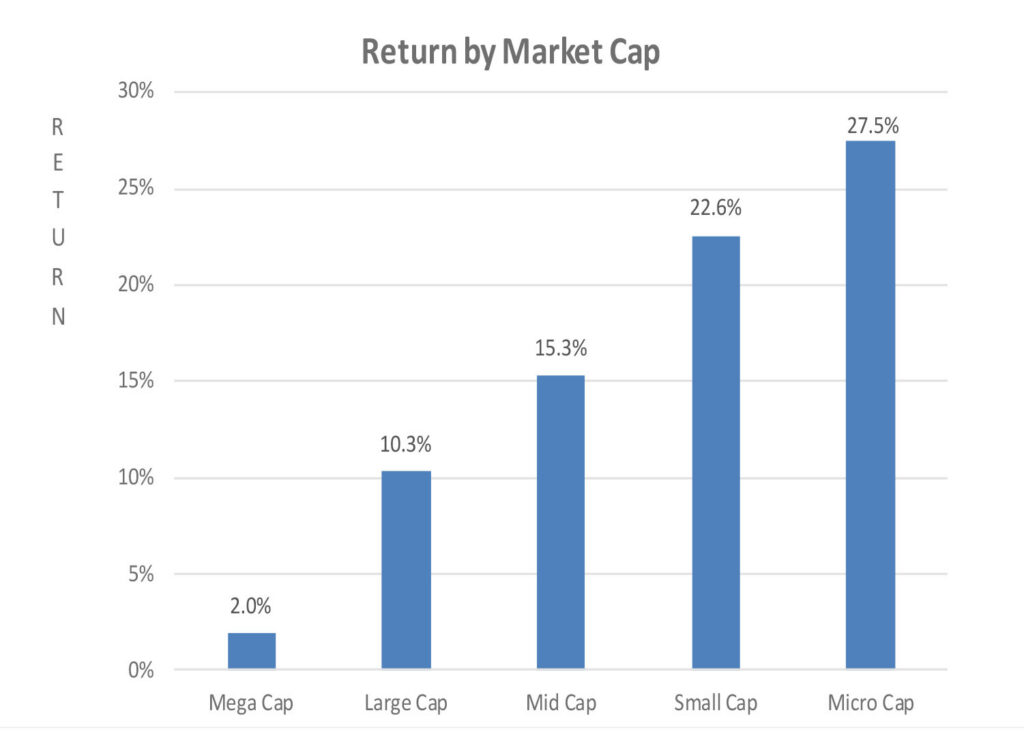
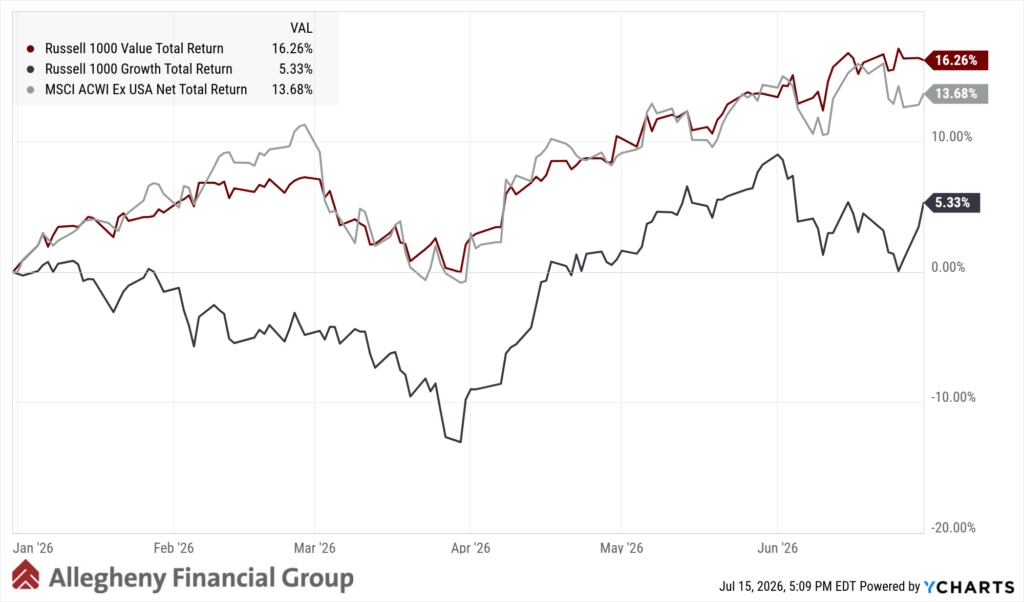
- Market leadership broadened beyond the Magnificent Seven, with small-cap, value, and international stocks contributing more meaningfully to returns.
- The first half of 2026 reinforced the importance of diversification, as opportunities expanded across sectors, regions, and company sizes.
Stock markets started the first half of the year at a strong pace. While investors continue to debate trade policy, elections, geopolitical risks, and interest rates, corporate America has largely continued to execute. Earnings growth has remained strong, and businesses continue to invest, demonstrating an ability to adapt to changing economic conditions. While stock prices can be influenced by headlines in the short term, earnings remain the foundation upon which long-term returns are built.
The broader economy tells a similar story. Growth has moderated from the rapid pace seen following the pandemic but remains positive. Consumer spending has held up better than many expected, unemployment remains relatively low, and business investment continues to support economic activity. This does not mean risks have disappeared. Inflation remains above long-term targets, interest rates have increased this year, and uncertainty around U.S. policy decisions and geopolitical developments continue. However, the economy continues to move forward, even if the path has become less predictable.
Like the past few quarters, the diversification trend has continued. However, throughout the first six months of the year, we have moved from the return of diversification to the evolution of diversification. Until recently, diversification largely meant international stocks outperforming domestic markets. This year, the opportunity set has broadened further. Most notably, small-cap stocks and value-oriented companies have joined the advance.
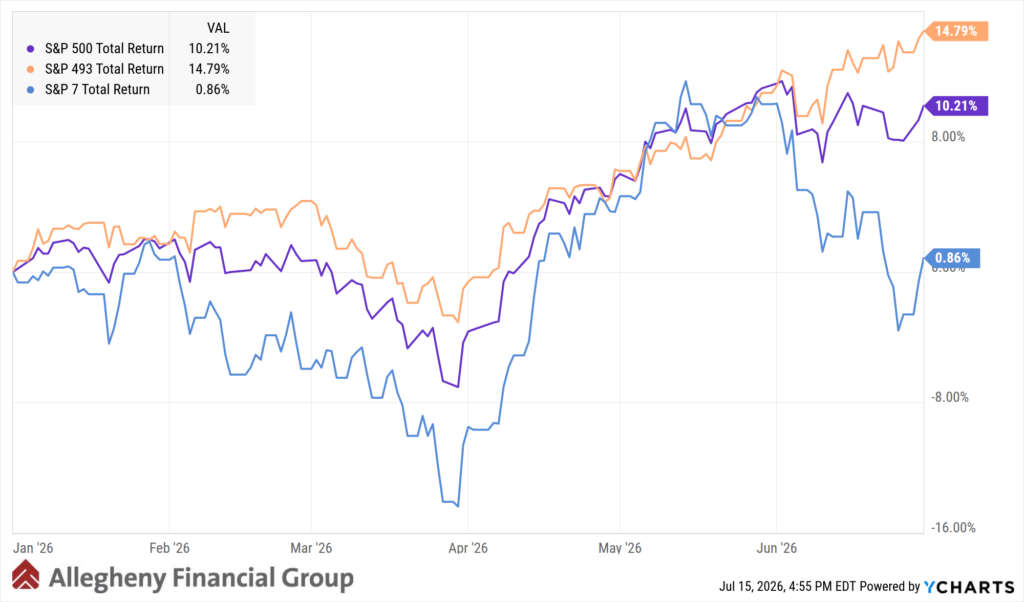
The once seemingly unbeatable Magnificent Seven companies are also off to an unusual start this year. After years of dominating returns, performance within the group has become increasingly mixed. While Alphabet is up approximately 14% year-to-date, Meta and Microsoft have declined by double digits, with the remaining four companies falling somewhere in between. While many of these companies continue to deliver strong earnings growth, this serves as a reminder that leadership changes, even among the strongest companies. The winners of the past are not always the winners of the future.
Strong bull markets are rarely sustained by a handful of companies. Instead, they are fueled by broader participation across industries, sectors, and regions. While artificial intelligence remains one of the most important investment themes, it has branched beyond the Magnificent Seven and into other areas of the supply chain. Market returns are spreading throughout the economy, creating a more balanced and durable foundation for future market returns.
Looking Ahead
As we enter the second half of 2026, numerous events will draw investor attention, including midterm elections, Federal Reserve policy under new Chair Kevin Warsh, and ongoing geopolitical developments. While these factors may influence short-term market movements, they rarely determine long-term investment outcomes alone.
The key question is whether corporate earnings and economic growth can continue to support higher asset prices. Although the economy has slowed since the post-pandemic surge, it continues to expand, businesses continue to invest, and consumers remain relatively healthy. At the same time, elevated interest rates and persistent inflation remind us that risks have not disappeared.
As seen with the Magnificent Seven this year, even great companies do not lead forever. Market leadership often shifts unexpectedly. Rather than attempting to predict where the next leader will emerge, the prudent path remains to focus on investing in diversified portfolios designed to participate across a broad range of opportunities.
The first half of 2026 reinforced the philosophy that successful investing is not about owning yesterday’s winners or predicting tomorrow’s headlines. Rather, it is about maintaining a disciplined process, staying diversified, and allowing time and fundamentals to drive long-term results.