Key Insights
- Q1 2026 was shaped by AI disruption, geopolitical conflict, and policy‑driven volatility, leading to mixed market results and continued dispersion across asset classes and styles.
- Diversification once again proved effective, as weakness in software and growth stocks was offset by strength in value, energy, and smaller‑cap equities, reinforcing the importance of discipline during volatile periods.
The first quarter was marked by diverse market drivers, including geopolitical risks in Venezuela and Iran, volatility from White House commentary, Supreme Court decisions on tariffs, and the divide between AI winners and losers. By the end of the quarter, market performance was mixed, with significant dispersion across asset classes.
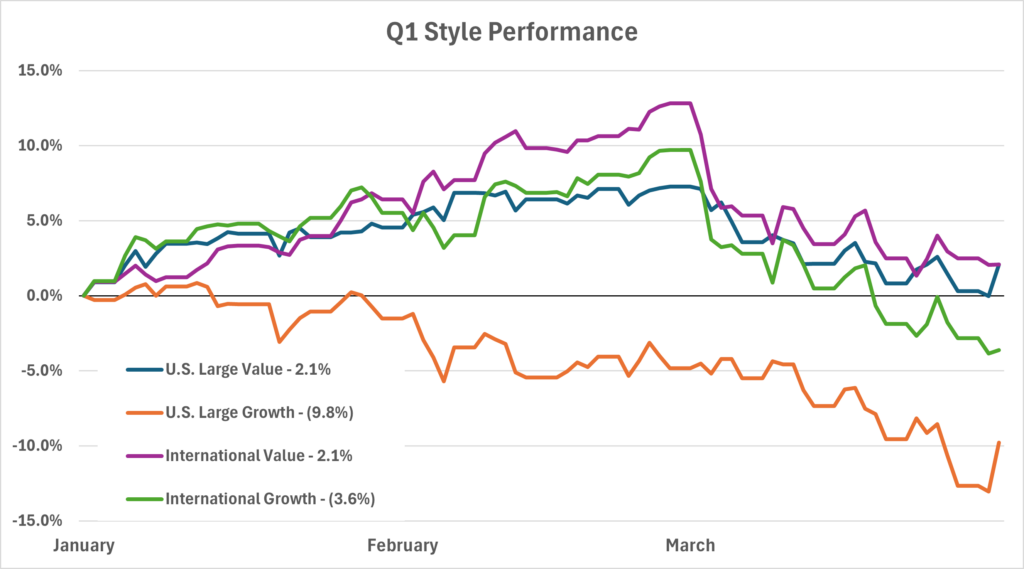
Before the U.S. and Israel began the Iran war in late February, markets followed trends similar to 2025. Diversification continued to add value, and small-cap stocks outperformed large-cap stocks for the first time in several periods. Most asset classes posted gains, except for large-cap growth stocks, which faced pressure as investors reconsidered the impact of artificial intelligence on software and IT services.
Software’s Disruption
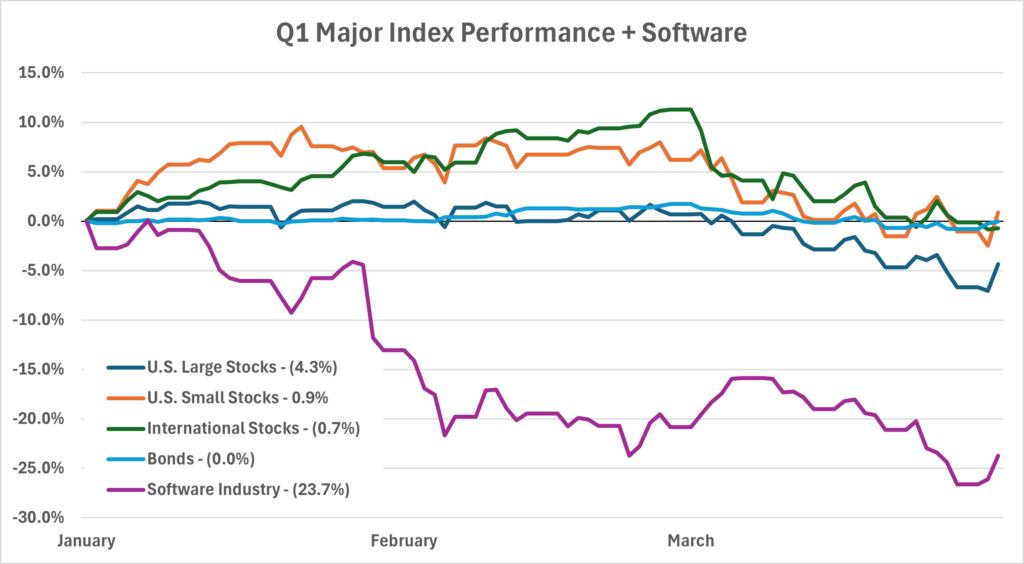
In January, software stocks experienced sharp volatility after Anthropic launched its “Claude” AI agent, Cowork, which demonstrated features that could potentially replace many software companies. This raised investor concerns that AI might disrupt more of the software ecosystem than previously anticipated. Consequently, the sector saw a significant sell-off, falling more than 25% at its low point during the quarter.
While it will likely take several quarters for a clear separation between software winners and losers to emerge, it remains highly unlikely that the entire industry will disappear. History offers several useful comparisons. New technologies have previously disrupted newspapers, music distribution, and media consumption; yet each transition ultimately created new leaders and new business models rather than eliminating entire industries. Software will most likely go through a similar journey, proving that disruption is not just about downside risks but also about the new opportunities it creates.
Geopolitics
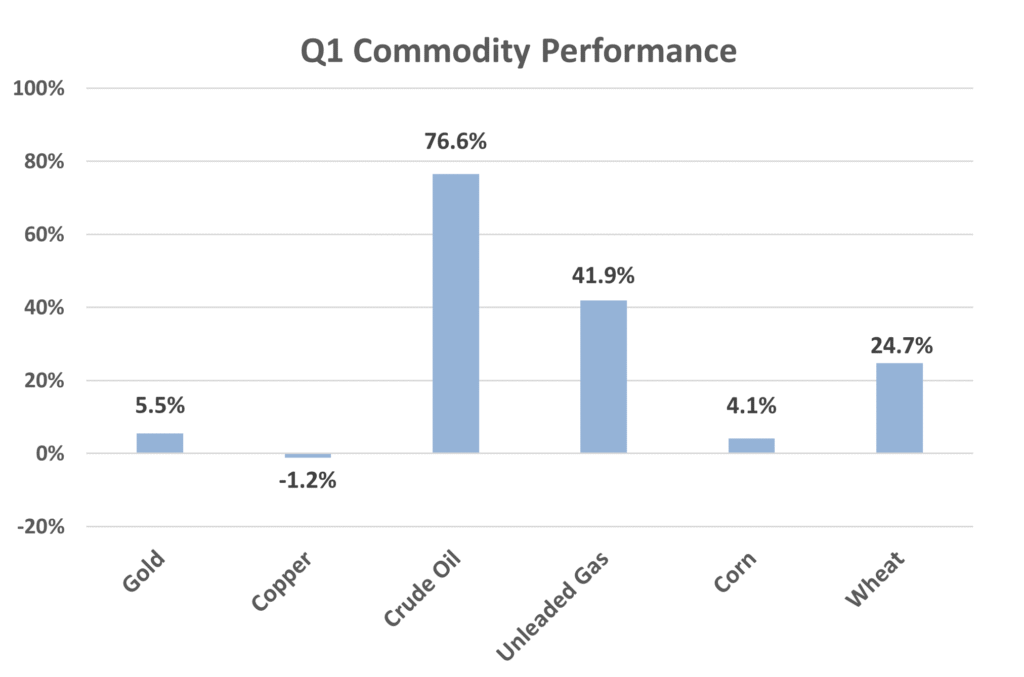
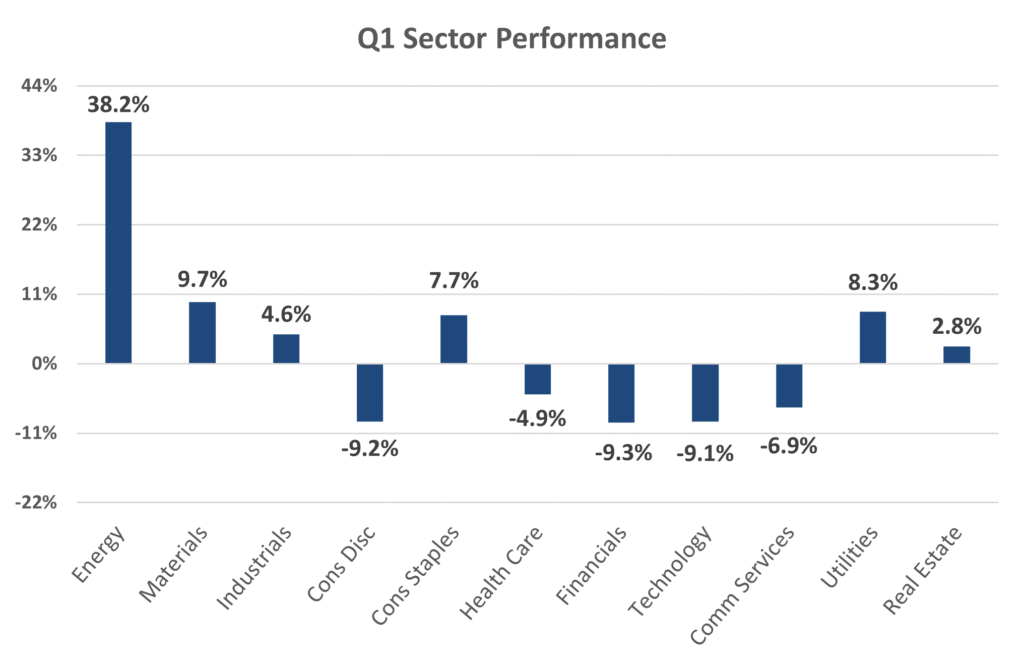
The market’s upward momentum reversed after February 28, when the U.S. and Israel began the war with Iran, causing volatility across all assets. From their February highs to quarter‑end, most major equity indexes fell between 5% and over 15%. Energy stocks, and commodities in general, were a notable exception, supported by a sharp rise in oil and other energy prices due to supply concerns and regional instability.
By March 31, market performance was uneven. Growth stocks lagged behind value stocks, with value ending the quarter modestly positive. Small‑cap stocks outperformed large‑cap stocks, and U.S. equities outperformed international markets. The war in Iran had a greater impact on international markets, mainly due to higher energy prices. However, before the conflict, international markets had outperformed U.S. stocks through the first two months of the quarter. As the U.S. has become an oil exporter, domestic markets have been less impacted during the more recent oil price shocks.
Portfolios During Volatile Times
Amid negative sentiment in software stocks and the market downturn caused by the war, many investors might ask for the best way to protect investment portfolios. The short answer is, do nothing.
Such periods highlight the importance of diversification instead of relying on short-term forecasts. Geopolitical events, policy changes, and technological shifts cannot be predicted consistently. Attempting to trade in response to these events can often increase portfolio volatility and reduce returns.
Diversified portfolios are built to withstand challenging environments like those just experienced in the first quarter. While some market segments declined sharply, others, including energy, value stocks, and smaller companies, helped offset losses. Maintaining discipline during volatility has consistently proven more effective than reacting to headlines or short-term market movements.